• Eric Bischoff Just Needs to Go Away

    July 2026 marked the 30th anniversary of WCW Bash at the Beach 1996 and the formation of the New World Order. The moment Hulk Hogan, a perennial babyface to that point, did his big leg-drop on ‘Macho Man’ Randy Savage is regarded as one of the most influential moments in professional wrestling history and helped kick off one of the biggest boom periods in the industry. It was under the New World Order that WCW Monday Nitro began dominating WWF Monday Night Raw in the ratings with an 83 week winning streak.

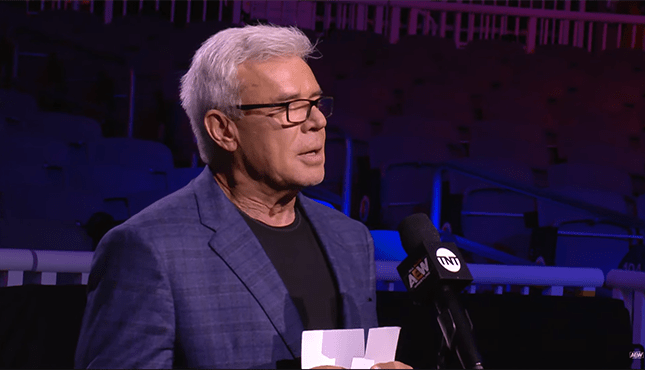
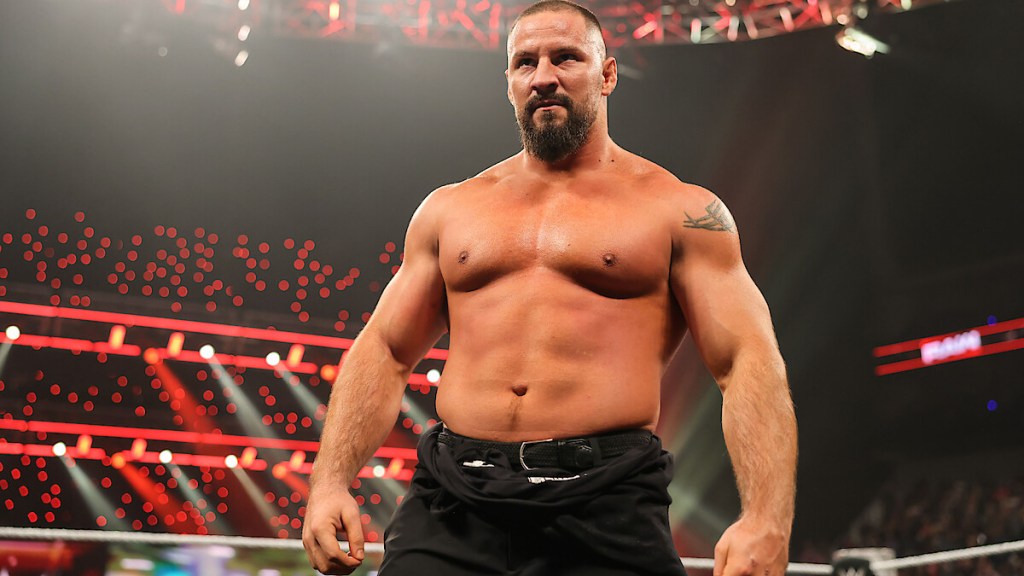
    You know who makes sure to remind wrestling fans about this at seemingly every opportunity possible? None other than ‘Easy E’ himself, Eric Bischoff.

    The last several years has seen the former-wrestling executing use his podcast, titled 83 Weeks, and social media presence to share his thoughts about the state of the industry. He also has experience in the industry at multiple levels going back to the late 80s, when he cut his teeth with the failing AWA as a broadcaster before moving on to WCW in the early 90s.

    And yet, with all this experience, there is maybe no “old head” in the space that actively spews some of the most tone-deaf and ignorant “opinions” about pro wrestling in 2026.

    During a recent episode of 83 Weeks, Bischoff decided to offer his two cents about the state of WWE and the inflated ticket prices that have become a major talking point among fans and pundits. WWE has gotten its fair share of blowback for ticket prices in 2026, with many fans feeling like the promotion is trying to price them out.

    TKO Holding Groups Mark Shapiro even said as much during several public speaking engagements this year, saying WWE fans are “resilient” or “we’ll make new fans” when asked about the criticism of ticket prices and the abundance of ads on the weekly TV shows and PLEs. Shapiro has made it clear that they want WWE ticket price scaling to fit right alongside the ticket price scaling for UFC, which has problems of its own.

    Ask the average fan, they hate this price gouging. Bischoff, on the other hand, thought it was “great.”

    “You’re not experiencing just a PLE. And I think that’s where entertainment in general is going. Not just wrestling, not just WWE, but I think entertainment in general is going in that direction. And I think it’s great,” Bischoff said on his podcast.

    He added that fans complaining is basically nothing to worry about and its a “them” problem.

    “You know, get an extra job, save some money up, you know, quit drinking, you know, three 12-packs of Mountain Dew during the week and throw a couple bucks in a jar and you’ll be able to afford to go, whatever,” Bischoff added.

    This comes a little over a year after his now infamous comment on the Ariel Helwani Show that if TNA Wrestling got the “right deal,” it could overtake AEW become the number two promotion in the U.S. TNA then got a deal with AMC that put TNA Impact on Thursdays in January 2026 and despite a promising first few weeks, ratings quickly bottomed out. Most weeks, the ratings barely even scratch the ratings for AEW’s “B show” Collision on Saturday nights.

    His latest comments, though, may be his most corporate and tone deaf to date given the current state of the world economy and job market. The cost of living has continued to climb while pay has been stagnating, especially in the U.S. People are being forced to penny-pinch just to afford necessities, leaving little-to-no room for things like WWE tickets at the current prices.

    Beyond these horribly tone deaf comments, Bischoff has just been a proverbial “bad take machine” for many years now. AEW, in particular, has been a regular target for Bischoff since making a handful of cameos on AEW TV between 2020 and 2021. Despite his appearances being well-received and things seemingly going well backstage, he “cut bait” with AEW using comments by AEW President Tony Khan talking about AEW’s success on TNT, and later TBS, in comparison to TV mogul Ted Turner and WCW.

    Khan has regularly pointed to WCW as an example of what not to do in wrestling, primarily from a management standpoint, while still praising the company for the influence it still has and foundation it laid for AEW to bring wrestling back to Turner stations.

    However, a popular conspiracy theory online suggests that the real reason Bischoff made AEW the target of his ire was simply he didn’t get a job. This has never been substantiated, though, and remains nothing more than a theory.

    Whatever the reason, Bischoff has made a point of going after AEW, and larger wrestling media, on his podcast. In the wake of these most recent comments, though, it is time for Bischoff to step away from the camera and microphone for good.

    The success Bischoff experienced in the mid-to-late 90s is something to be respected. Nitro was revolutionary for the industry at the time of its premiere, despite allegedly only coming about because Turner asked Bischoff how WCW can actually compete with WWF during a meeting that was about international broadcast rights. And the nWo became the biggest thing in the industry for a time, becoming one of the first pro wrestling acts of the mid-to-late 90s to truly cross-over into mainstream pop culture off the back of the Monday Night Wars.

    If you took a step back to look at Bischoff’s entire career, though, it becomes clear he has more “misses” than “hits” in his career.

    Signing Hulk Hogan in 1994 was a boon for WCW, but didn’t provide the major growth Bischoff and others may have been hoping for. Cartoonish storylines like the Dungeon of Doom remain a punching bag for fans to this day, his “partnership” with Vince Russo to try a rebuild WCW in 2000 crash-and-burned fairly quickly, and his attempt to purchase WCW fell through after the new executive board at Turner Broadcasting, led by Jamie Kellner, told Bischoff and his partners in the proposed purchase Fusient Media Ventures that they would not get the Monday timeslot for Nitro.

    This torpedoed the deal’s value from around $60-75 million to the estimated $4.2 million WWF ultimately paid for WCW.

    Bischoff would then sign with the rebranded WWE in 2002 to serve as the on-screen GM for Raw until 2005, but didn’t have any notable executive role backstage at the time.

    In 2010, Bischoff and Hogan were hired by Dixie Carter to join TNA Wrestling on the pretense that they would be the pair to bring TNA to the “next level.” The pair were effectively handed the “keys to the kingdom” as TNA founder Jeff Jarrett put it in the three-part season seven premiere of Dark Side of the Ring covering Jarrett’s time in TNA.

    The two gave the promotion a complete overhaul, bringing in an abundance of ex-WWE talent, such as Mr. Anderson and Orlando Jordan, and old friends like the Nasty Boys. Impact would then move to Mondays in the hope of recapturing some of the magic from the Monday Night Wars and hopefully kick off a new boom period.

    But the most unpopular choice made was changing TNA’s famous six-sided ring to a traditional four-sided ring. Hogan and Bischoff were met with chants of “We Want Six Sides” from fans in attendance on the first night of the change. Bischoff, himself, doubled-down on this on Dark Side of the Ring, saying he thought the six-sided ring was “stupid” and if there wasn’t a “scenario” created as a result of being in the six-sided ring then “it didn’t change anything happening on the mat.”

    As one can imagine, this was also met with backlash from fans for Bischoff’s obliviousness to his comment and how simply having a match in a six-sided ring accomplishes what he talked about.

    Bischoff then got one more shot in WWE when he was hired as the new executive director for SmackDown in 2019. This was part of an effort by WWE to refresh a product that many fans felt hit a creative rock bottom that year due in large part to Vince McMahon’s age and stubbornness. This didn’t last long, though, as Bischoff was gone by the end of 2019. He even admitted afterwards that he hadn’t been following WWE’s product closely and was very unfamiliar with the show or wrestlers he was tasked with overseeing.

    All of this goes to show that, for as successful as Nitro and the nWo was for a time, they were Bischoff’s only real success stories in pro wrestling. He is someone who has failed far more often than he has succeeded and continues to grovel at the feet of the late-Hulk Hogan, who was booed out of the building at his last appearance for WWE for the Netflix premiere of Monday Night Raw in January 2025.

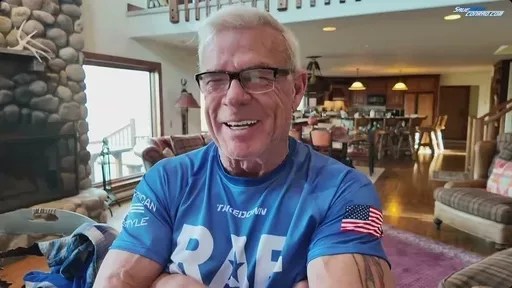
    His amateur wrestling promotion he co-founded with Hogan, Real American Freestyle, continues to be somewhat of an afterthought in the larger sports and pop culture zeitgeist.

    Bischoff had his moment in the sun, and that moment was 30 years ago. It is time for everyone, especially ‘Easy E’ himself, to move on.

  • A Love Letter to PWG

    In July of 2003, a group of independent wrestlers pooled their resources into starting a new, wrestler-run indie in the fledgling South California wrestling scene. Pro Wrestling Guerrilla would run its first show in City of Industry, California, with an originally announced Samoa Joe vs. AJ Styles main event becoming Frankie Kazarian vs. AJ Styles as a result of injuries and travel problems for Joe.

    It was a promotion that prided itself on showcasing some of the best in-ring professional wrestling fans could find. The action was typically fast, hard-hitting, and technical in front of what became one of the hardest to impress fans across the U.S. This became even more evident when PWG moved in to what would be its longtime home – an American Post Legion Hall in Reseda, California.

    The setup became famous for its compact setup, with an 18×18 ring with as many chairs set up as the building can hold and fans sitting so close to the ring they can smack the apron. It was this crowd of regulars that became the ultimate judge and jury for anyone building a name on the independent scene. So when this crowd gave a match a standing ovation, it was clear this was something fans who couldn’t be there needed to seek out.

    Names like Kevin Steen, El Generico, Kenny Omega, Candice LeRae, The Young Bucks, and many others still wrestling on TV in 2026 were regulars at the SoCal promotion as it grew. The early years, especially, saw many of the names fans were seeing in a fledgling Ring of Honor and TNA, with Styles and Joe being early foundational names.

    The Bucks, specifically, became the proverbial torchbearers for PWG in the 2010s. The brother tag team would seemingly go out of their way to try and make it back home to SoCal so they could make most PWG shows, especially from 2015 to 2017.

    It also helped that many of the people involved with PWG behind the scenes had connections in Japan and Mexico, giving foreign promotions a way to break into the U.S. market. It was reminiscent of ECW in the early and mid-90s when names including Rey Mysterio, Eddie Guerrero, and Chris Jericho, among others, broke into the larger U.S. wrestling scene after years of working internationally.

    CIMA and Shingo Takagi were among two of the many Japanese stars who stopped in from time to time in those early years representing Dragongate. Given the long travel time and costs, Japanese talent would only appear a couple times a year for PWG’s biggest shows of the year.

    The 2010s, by comparison, saw more and more luchadors start working PWG due to the promotion’s proximity to the U.S.-Mexico border and more independent luchadors starting to work the Southwestern U.S. more regularly. It was also fairly close to where Lucha Underground was being made in SoCal, giving PWG an in with the promotion AAA and the independent luchador scene across Mexico. The Lucha Bros., Drago, Puma King, Black Taurus, and Bandido were just a handful of the names to appear in that period.

    And then there was the crown jewel, the show that became a must-see annual event for fans of the indie scene. That show was the Battle of Los Angeles.

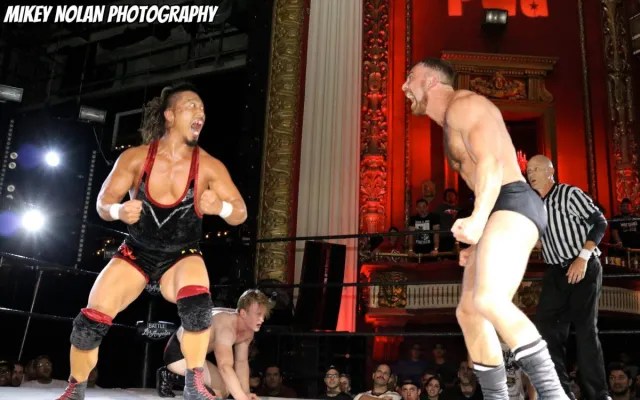
    The Battle of LA, or BOLA for short, would shift between one, two, and three day formats for the annual single-elimination tournament. It was widely regarded as PWG’s biggest weekend every year that saw some of the top names in the independent scene or who were signed to TNA, MLW, or a handful of other promotions that allowed their talent to take outside bookings. It was also the promotion’s way of suggesting who it considered to be the best wrestler on the scene at that time.

    The roughly 20 years of PWG’s life saw it become one of the premiere indie promotions for wrestlers to work for. If someone had managed to build a prominent name on the indie scene, getting booked by PWG was seen as a form of validation and someone both fans and the larger promotions like WWE should keep an eye on.

    And take notice WWE did as PWG became a regular stop for William Regal as he shifted away from the ring to working more backstage for WWE as a talent scout. NXT’s Black and Gold era reflected this as most of the prominent independent names brought in during this time.

    The good times couldn’t last, though, and PWG was forced to suspend operations for the rest of 2020 as a result of the COVID-19 pandemic. PWG wouldn’t run a show until August 1, 2021, with Mystery Vortex 7, a show with no card or talent announced beforehand.

    The promotion would limp on for the next two years, running fewer and fewer shows until PWG TWENTY: Mystery Vortex in August of 2023 becoming the de facto final show in the promotion’s history. Super Dragon, one of only two of the six founders still involved in PWG, revealed his partner at the time was going through health issues that required the couple’s full attention. As a result, he said the promotion would be on “hiatus” for the foreseeable future.

    While it was never officially shut down, most fans don’t expect the SoCal indie destination to return soon, if ever. It would be a true shame if it didn’t as this would mark another iconic and key indie promotion of the 2000s and 2010s gone, joining the likes of Evolve and Dragongate USA.

    The loss of PWG, though, hurts even more because of how PWG was regarded during the peak of its popularity. Some indies would still manage to create some big buzz in the years since the last PWG show, including GCW and DPW, but no one has ever really managed to replicate the type of excitement PWG was able to generate.

    In a world where promotions and wrestlers, alike, are trying to find ways to stand out and be successful, PWG was truly one of a kind. Whether it was the American Legion Post Hall or the Globe Theater or anywhere else it ran a show in that 20 year period, fans knew it was destination viewing when a new show was announced. Even celebrities made the odd appearance at a PWG show over the years, one of the more famous instances being Joe Manganiello and Sofia Vergara in 2015.

    The Bucks superkicking LeRae with an Air Jordan with thumbtacks glued to the entire sole, Generico ripping a vent off the roof during a ladder match, Jushin Thunder Liger controlling time with a clicker and no shortage of broken chairs from dives out into the audience are just a few of the memories left behind by the SoCal mainstay. If it is truly time to leave PWG in the rearview, at least fans have these memories and plenty, plenty more to look back on and celebrate as the wrestling world continues to evolve.

    So thank you, PWG, and bye for now.

  • WWE is in its WCW 2000 Era….And it could still get worse

    Forced celebrity involvement, unneeded breaking of the 4th wall, and uninspired, repetitive, and questionable storytelling. Is this describing WCW in the year 2000 or WWE in the year 2026, or both?

    The final calendar year of WCW’s existence was a rough year for the company that only a few years earlier was on top of the wrestling world. It was even rumored the Ted Turner-owned promotion could be the one to kill Vince McMahon’s WWF as the company struggled to find a new identity after the end of the 80’s boom and failure of the New Generation.

    WCW in 2000 is widely regarded as one of the worst years of any promotion between terrible creative choices and record losses. A constantly shifting creative team, including two infamous runs by Vince Russo as the head writer and the return of Eric Bischoff after being relieved of his duties in 1999. This inconsistency was visible in the show as angles and feuds would randomly stop, start, or wildly change directions as WCW slowly hemorrhaged viewers.

    An attempt to relaunch the New World Order failed to even get off the ground due to Bret Hart’s career-ending injury from a sidekick by Goldberg at Starrcast 1999. Bischoff and Russo were tasked with working together, leading to the infamous relaunch in mid-2000 that kicked off the failed New Blood storyline and infamously Bash at the Beach 2000. Russo would be gone by the end of the year as WCW limped into 2000.

    The company looked to be on the cusp of rebuilding with The Magnificent Seven storyline kicking off to try and anchor the main event and upper-mid card scenes. Attempts were also being made to rebuild the rest of the card, including a renewed emphasis on the cruiserweight division. It was during this time 2000s mainstays like AJ Styles, Elix Skipper, Lance Storm, Shane Helms, and Jimmy Yang, among others, got their first shot on national TV.

    Unfortunately, WCW was one of the biggest casualties of the Time Warner-AOL merger and the internet bubble popping. The losses accrued over the last two years by WCW and an executive team that had no interest in keeping professional wrestling on the books effectively killed the promotion, as a bid to buy it by Eric Bischoff and Fusient Media was shot down after new Chairman and CEO of Time Warner Broadcasting Jamie Kellner basically said Fusient could by the company but wasn’t getting the primetime TV timeslots originally promised. It effectively killed the deal’s value and WCW was bought shortly after for the fire-sale price of $4.3 million.

    The same creative malaise has been happening to WWE in 2026. Signs of a downturn started to appear in 2025, though many of these cracks were covered up John Cena’s retirement run. When the calendars turned over to 2026, though, these cracks became much more obvious and noticeable starting with a poorly received Royal Rumble due to the overall quality of the show and that it took place in Saudi Arabia. A poorly received WrestleMania build up and down the board followed, and it hasn’t gotten any better just two days out from SummerSlam Night One.

    Unlike WCW, WWE’s creative team is largely the same team it has been since WWE entered its most recent boom period around mid-2023. This has led to many fans and critics suggesting this is a mix of burnout on part of the creative team and corporate mandates from WWE’s parent company, TKO Group Holdings.

    WrestleMania 42 is the best example from this year of the corporate mandates at what many fans felt was its absolute worse. It was most evident on Night One when the opening match for the free ESPN portion involved internet personalities iShowSpeed and Logan Paul, though Paul is also a full-time contracted performer for WWE. The main event of the night which saw Undisputed WWE Champion Cody Rhodes defending the title against Randy Orton became an fourth-wall breaking feud that seemingly became more about Pat McAfee, Jelly Roll, and the state of WWE, than it did about what is supposed to be one of the top belts in the promotion.

    The same has taken place ahead of SummerSlam, though it doesn’t appear that many of the celebrities and sports figures featured on WWE TV ahead of their big summer show will appear on it. However, at the July 18th Saturday Night’s Main Event in New York City’s Madison Square Garden, Karl-Anthony Towns and NBA Finals MVP Jalen Brunson from the 2025/2026 NBA Champions New York Knicks were featured heavily. Brunson, specifically, was part of a main event segment involving himself and WWE World Champion Roman Reigns that also involved some build to Reigns’ SummerSlam match against Seth Rollins who was joined by Tyrese Haliburton of the Indiana Pacers. Despite the reception in the building, the wider reception from fans watching at home was mixed at best.

    A little over a week later, controversial boxer Ryan Garcia ran in during a Joe Hendry and Danhausen concert segment on Monday Night Raw. Garcia, who has faced severe public backlash for many of his openly racist comments in the past including claiming membership to the Klan and referring to the LGBTQIA+ community as a “cult.” He has also been suspended for failing drug tests and was booted from the WBC for a year-and-a-half for comments against the Muslim community. His involvement, on top of the extremely negative reception to the entire segment, contributed to what many consider the worst Raw of 2026.

    This was all in the middle of what many fans and commentators in the space have described as a lackluster SummerSlam build at the best of times.

    All this has led to plenty of, frankly, deserved comparisons to WCW specific brand of bad wrestling TV in the year 2000. It’s only been exacerbated by season three of WWE Unreal on Netflix, which many felt only opened WWE’s creative up to even more criticism after clips of Triple H saying he was “worried” fans would think WWE was trying to shove Bron Breakker “down their throats.” Many were quick to point out the irony in this given it was Triple H saying it and how fans now look back at Jey Uso’s 2025 push that appeared to start strong but ultimately petered out.

    Unlike WCW in 2000 and heading into 2001, WWE’s future seems fairly safe for at least the immediate future.

    WWE has been the one arm of TKO Group Holdings generating massive revenue to try and chip away at TKO’s $4.96 billion debt due, mostly, to the UFC side of the merger. It has led to further and further price gouging by WWE as it attempts to monetize every possible avenue and raising ticket prices exponentially. While it has contributed to a noticeable downturn in attendance, with both nights of SummerSlam crossing over 30,000 sold for each night at the U.S. Bank Stadium in Minneapolis, Minnesota, a building capable of holding over 70,000 people based on setup.

    Unfortunately for fans, this financial security means WWE doesn’t have to rush to address these issues even as they become more glaring. It has been reported that there’s “increased pressure” on WWE’s creative, but it remains to be seen if any potential changes would have meaningful and immediate impact especially with the mandates handed down by TKO’s executives in the past.

    And then there is the looming cloud of WrestleMania 43 in 2027, emanating from Riyadh, Saudi Arabia. The announcement was met with overwhelming negativity from fans given Saudi Arabia’s history of human rights violations and treatment of women and the LGBTQIA+ community. The perceived fumbling of Bron Breakker and missteps with Oba Femi hasn’t helped things, either. It wouldn’t be surprising if The Rock vs. Roman Reigns was on the table for WrestleMania 43 between Rock’s recent Hollywood disappointments and the amount of money Saudi Arabia would likely pay for a Rock match at this WrestleMania.

    This is all to say fans may not have seen the worst of this creative downturn from WWE due to its financial security. It isn’t to say everything is entirely safe as their ten year deal with Netflix for Raw having an out option for Netflix after five years. However, since they are only in the second year of that contract, WWE and TKO’s higher-ups may not feel the immediate pressure to try and course correct. Instead, it seems as though Triple H and executives like Nick Khan and Mark Shapiro are happy to write off fan complaints by either telling them to “just enjoy the show” or they don’t need long-term fans and they’ll simply make new ones.

    But the bill always comes due, and if things do indeed get worse, WWE may find itself holding a pretty massive bill at the end of it.

  • Xbox and PlayStation in 2026 – A Year of Self-Owns

    It has been a rollercoaster year for both Xbox and PlayStation through July of 2026, to say the least.

    Both companies have experienced some pretty high-highs, especially off the backs of their respective June showcases. Between titles like God of War Laufey, Wolverine, Fable, and Gears of War: E-Day, there was plenty to get excited about to say the least.

    Unfortunately for both companies, any highs have been massively undercut by a series of devastating self-owns over the first half of the year. Each has managed to find new ways to antagonize consumers to an almost hilariously fast, but justified, pace. Layoffs and potential studio closures, the abrupt ending of a beloved game in favor of one that never got off the ground, and a variety of anti-consumer decisions have dotted 2026 in a year where general tensions between corporate interests versus citizens’ interests are at an all time high in the U.S.

    Standing head and shoulders above them all was PlayStation’s announcing it will end physical game production in 2028. The company said in PlayStation.Blog post “as consumer preferences and the broader entertainment industry continue to shift away from physical discs to digital, physical game disc production for all new games releasing on PlayStation consoles will be discontinued starting January 2028.”

    To say consumer backlash was sever would be an understatement. PlayStation immediately found itself in the crosshairs of every gaming outlet and several national outlets, pundits, content creators, and third-party studio for a decision that is both anti-consumer and anti-preservation, as more digital content with no physical backups means a higher risk for content to be lost forever. It would be akin to the original Mona Lisa being converted into an NFT and then the source code is suddenly deleted, losing this file forever with no chance of recovery. And thus, one of the greatest pieces of art in human history is lost forever because someone hit ‘delete’ by mistake.

    Xbox hasn’t been much better, with the very fate of its many first-party studios becoming more and more unsure.

    Microsoft’s gaming arm managed to drum up plenty of good will heading into its June Xbox Showcase, the first under new Xbox CEO Asha Sharma, who took over from longtime CEO Phil Spencer following his retirement. She came out of the gate saying all the right things, such as removing Microsoft’s AI Copilot from Xbox, that resonated with consumers. It looked even stronger coming out of the June Showcase with news on Gears of War: E-Day, Halo: Campaign Evolved, Fable, a new game in the Plague Tale universe, and Doom: The Dark Ages – Revelations, the game’s first major DLC, and plenty more.

    One in particular caught people’s eyes – Senua. A third game from in the Hellblade series from developer Ninja Theory which had only grown in popularity from the first to the second game in the series. It appeared as though Xbox may have found its answer to God of War on PlayStation, and it was clear there was genuine interest in Senua.

    Days later, it was reported by the Game File that the Senua trailer was meant as a pseudo-sales pitch for any parties interested in purchasing Ninja Theory from Xbox. Around this time, it was also reported Xbox was looking to close or sell several of its own studios amid larger financial difficulties plaguing all of Microsoft in 2026 between what it has spent on AI and the legal challenges it brought with it, among various other issues.

    In one fell swoop, Xbox managed to wipe away all the good will it had built in the previous months.

    Asha Sharma’s activities since the Showcase hasn’t helped, either, especially after she was made an adviser on the economic impact of AI for the U.S. Federal Reserve’s Productivity and Jobs Task Force. It was met with almost immediate backlash by consumers and outlets, alike.

    Rockstar even got in on the action when it announced the long-awaited Grand Theft Auto VI would only be available digitally. A “physical copy” would be released in stores, which was simply a case with a digital code inside. Rockstar was hit with much of the same criticism as PlayStation for the looming end of physical game production.

    A $100 price tag for GTA VI didn’t make things any better.

    Despite all this, both gaming powers still have plenty of titles on the way that people want to get their hands on. God of War Laufey and Wolverine both look like the type of major single-player epics the PlayStation has been known for since the very first back in 1994. Xbox is giving some of its most popular franchises a shot in the arm with highly anticipated new games in the Fable and Gears of War series on top of a full remake of the entire campaign from Halo: Combat Evolved.

    These are things people want to play and want to be excited about.

    But when decisions like these draw the reactions they do, the powers that be need to actually listen. It isn’t just white noise. It is the sound of growing disdain that will, not may, come back to haunt them down the line if they don’t recognize the issues they are creating and contributing to.

    One silver-lining in all of this looks to be the resurgence of the $30-$60 AA studios filling the malaise created by the major powers in the industry. Saber Interactive, Focus Entertainment, Deep Silver, and THQ Nordic are just a few of such studios to emerge in recent years, providing an avenue outside one of the major publishing powers for developers to try and get their games made.

    More developers are just publishing their own games outright, as well, and have grown into significant independent powers. Larian Studios is among the more notable of these independent publisher-developer studios thanks to its popular role-playing series Divinity and 2023’s widely-acclaimed Baldur’s Gate 3.

    Larian has since announced its next title, Divinity, in quite the dramatic and grotesque trailer at the 2025 Game Awards.

    As for what the rest of 2026 could hold for Xbox and PlayStation, there are still plenty of games consumers want to get their hands on, Wolverine and Gears of War: E-Day among them. The self-owns, however, show no signs of slowing down either, with plenty of question marks still swirling around the futures of several studios under Xbox or PlayStation ownership after swaths of layoffs at the likes of Bungie or id Software and plenty of justified concerns over AI implimentation.

    Only time will tell.

  • The Nerd’s Wrestling Journal – Royal Rumble 1992: The End of a Golden Era

    When calendars turned over to 1992, the wrestling world was in unique state. WWF was still on top of the world but signs were starting to appear that a downturn was on the way. WCW was still struggling to establish an identity between a revolving door of bookers and mounting debt. And ECW was almost two months out from having its first show at Philadelphia’s Viking Hall, known today as the 2300 Arena.

    The Golden Era of the mid-to-late 80s still had some gas in the tank, though, and no show symbolized this better than the 1992 Royal Rumble.

    Widely considered by both fans and critics as one of the greatest Rumbles WWE has ever put on, the show and match, itself, is almost the purest distillation of the the late 80s boom. The roster was a who’s-who of stars from across the U.S. wrestling industry from Hulk Hogan to Ric Flair, Kerry Von Erich, Sid Justice, and many more, making for one of the most star-studded Rumble matches in history.

    All this is scored with the voices and arguably one of the greatest commentary pairings in history – Gorilla Monsoon and Bobby ‘The Brain’ Heenan. Heenan, in particular, has one of his most iconic commentary outings on this show thanks to his chemistry with Monsoon and being paired with Ric Flair when the NWA and WCW icon joined the WWF in the summer of 1991.

    But first, there is the undercard.

    There is no Royal Rumble undercard that has as many tag team matches as the 1992 show has. Three tag matches dot the opening 46 minutes of the show. The New Foundation of Owen Hart and Jim Neidhart defeated the Orient Express, comprised of Kato and Pat Tanaka and Mr. Fuji serving as their manager. Luke and Butch, The Bushwhackers, would lose in the third match of the main card to The Beverly Brothers, Beau and Blake, who were joined by their manager, ‘The Genius’ Lanny Poffo. And following that, the Legion of Doom, also known as the Road Warriors in the NWA, would remain WWF World Tag Team Champions as they lost to Jimmy Hart’s team of The Natural Disasters, Earthquake and Typhoon, by count-out.

    Squeezed in-between all the tag team action, then-WWF Intercontinental Champion The Mountie put his title on the line against the beloved Rowdy Roddy Piper. It was a brief match that was less about the match, itself, and more about giving the ‘Hot Rod’ a long overdue moment as he won his first championship in WWF since he joined in 1984.

    He wouldn’t hold it for very long, losing it at April’s WrestleMania VIII to Bret ‘Hitman’ Hart.

    And then there is the Rumble which, for the first time, would see the WWF Championship which had been vacant since WWF President Jack Tunney held up the title in the wake of two questionable title changes between The Undertaker and Hulk Hogan.

    The match, itself, kicks off with The British Bulldog and ‘The Million Dollar Man’ Ted DiBiase, two staples of late 80s WWF. What follows is one of the most star-studded matches in professional wrestling history that, as mentioned earlier, is able to serve as almost a summary of the entire Golden Era.

    This is most obvious in the eventual winner, Ric Flair.

    Flair joined the WWF in August 1991 after a falling out with then-WCW President Jim Herd over a request for Flair to take a pay cut and Herd’s ideas to “refresh” Flair, the most infamous being a request for Flair to cut his hair, get a diamond earring, and change his name to Spartacus.

    When Flair showed up on WWF television, he arrived with the NWA World Heavyweight Championship, known to fans lovingly as “Big Gold.” This was due to the NWA requiring the world champions to put down a $25,000 security deposit while carrying the physical belt in case something happened to it until it changed hands again, and Flair claimed since he was not paid back his deposit when his WCW contract ended, he could retain custody of the physical belt. A lawsuit by WCW would halt use of the physical belt on WWF TV, which was replaced with a spare WWF World Tag Team Championship belt pixelated out until the 1992 Royal Rumble.

    Over the Rumble’s remaining hour, fans would be treated to a proverbial all-star team of professional wrestlers for the time. ‘The Texas Tornado’ Kerry Von Erich, Shawn Michaels, Haku, Jake ‘The Snake’ Roberts, ‘Macho Man’ Randy Savage, The Undertaker, Hulk Hogan, Rick Martel, Sgt. Slaughter, and Sid Justice are all entrants in this Rumble, all looking to leave with the WWF World Championship.

    The match comes down to Hogan, Flair, Savage, and Justice, providing a convenient preview to the “double-main events” of WrestleMania VIII.

    It was in this closing stretch that the end of the Golden Era becomes most obvious. The match crescendos after Savage’s elimination as Hogan who, while trying to eliminate Flair, is eliminated by Justice from behind in a move meant to turn the crowd against Justice for eliminating WWF’s ultimate good guy. Instead, Hogan’s elimination was meet with loud cheers from the crowd in a sign they were craving new names on top of the promotion and Hogan’s time in that spot was likely over.

    Hogan would then grab Justice’s arm to try and pull him out of the ring, which Flair is quick to help with and win the Rumble. Flair would head to the back while Justice and Hogan traded words in the ring, with the crowd clearly taking Justice’s side in the matter.

    In the back, fans are treated to, arguably, Flair’s greatest promo to celebrate his title win. It is here he deliver’s his iconic “With a tear! In my eye!” to mark what he says is the greatest night in his career.

    From here, WWF heads to WrestleMania VIII where Flair would face Savage for the WWF World Title in a feud centered around the title and accusations by Flair he had been with Savage’s beloved valet and real-life partner, Miss Elizabeth. Hogan and Justice would main event the show with one of the most infamous WrestleMania main events where Hogan won by disqualification after interference by Papa Shango and Hogan was saved by a returning Ultimate Warrior. However, the first run-in was blown when Shango was late getting out to the ring.

    The undercard, by comparison, was a preview of things to come as WWF began to shift away from the older stars and carry-overs from the late 80s, including Hogan. Shawn Michaels, Bret Hart, and The Undertaker each win their matches, setting the stage for a period in WWF headlined by those three.

    Hart, specifically, would be WWF World Champion by the end of 1992 and main event WrestleMania IX in 1993 against Yokozuna in perhaps the most infamous WrestleMania ending ever. Yokozuna would win the title after his manager, Mr. Fuji, threw salt in Hart’s eyes as he attempted to lock in the Sharpshooter. Hogan would then run out to check on Hart and be challenged by Yokozuna to a title match right then and there, which Hogan won. It is often highlighted by fans as a moment that best summarizes Hogan’s infamous backstage politicking to keep himself on top.

    And while that was still a year-and-a-half away, the road to get there was seemingly set when the 1992 Royal Rumble ended and the fans in attendance in Albany, New York, filed out. They didn’t realize they were witnessing the end of an era, one that at least got a worthy sendoff that cold night in January.

  • Mark Davis – AEW’s unsung MVP of 2026

    The year 2026 has been a very good for AEW.

    Their weekly TV has received regular praise for maintaining a consistent quality. Dynamite in 2026 has played host to major moments in AEW history, including two world title changes, while Collision continues to be the show for “the sickos” wanting two hours of some of the best and purest in-ring wrestling on TV.

    On the pay-per-view side, all four shows thus far in 2026 have been hailed as being among the best in company history. Double or Nothing and Forbidden Door, in particular, are both among AEW’s top ten highest-rated shows by fans on Cagematch.

    The roster may be the strongest it has ever been, as well, with the wealth of talent and names dotting AEW’s men’s and women’s divisions. But more importantly, a large majority of the roster is over with crowds to some degree, giving AEW the flexibility to put a wider variety of people on either of its weekly shows even if someone hasn’t appeared for several weeks.

    One name in particular has been a standout in 2026, having a career year after their first few years was snake-bitten with various injuries. It didn’t help that their tag team partner broke out as a singles star in that same time to become one of AEW’s marquee names and is seen as a future world champion in the promotion.

    That wrestler – Mark Davis.

    Davis was signed by AEW in May 2023 alongside his Aussie Open tag partner Kyle Fletcher, with the pair expected to become a key part of AEW’s tag team division. However, Davis suffered his first injury with AEW when the team challenged then-champions FTR for the AEW Men’s World Tag Team Titles at AEW WrestleDream in October and Davis wound up breaking his wrist.

    He returned in October 2024, joining the Don Callis Family shortly after and rejoin Fletcher who, as mentioned, became a breakout star in the time Davis was out and key member of the Don Callis Family.

    Just as it seemed Davis was regaining momentum, he suffered a broken foot following a match with Powerhouse Hobbs on a March 2025 Dynamite. He would return from that injury several months later in October, and has since been able to avoid injury.

    Cut to 2026 and Davis, only suffering brief hiccups due to recent AEW signing Jake Doyle, who Davis was set to challenge for the tag titles with, got injured almost two weeks after signing, and a brief holdover due to issues renewing his U.S. work VISA along with many other AEW and WWE wrestlers.

    Aside from those, the veteran from Queensland, Australia, has quietly emerged as one of AEW’s standout workhorses and TV wrestlers over the course of the year. He’s gotten to share the ring with many of the promotion’s top names including Will Ospreay, Darby Allin, and ‘Hangman’ Adam Page, putting on one of the best matches of the show in a losing effort.

    The work wasn’t lost on AEW’s top brass, though, as Davis would win his first AEW gold in 2026.

    He first won the AEW World Trios Championship with his Don Callis Family stablemates Kyle Fletcher and Kazuchika Okada in March, but would lose them barely two weeks after to ‘Speedball’ Mike Bailey, ‘The Jet’ Kevin Knight, and CMLL star and new AEW signee Mistico at AEW Revolution.

    Davis would win his first singles title in May at AEW’s Fairway to Hell special, defeating ‘Jungle’ Jack Perry for the AEW National Championship.

    As of July 12, he is still AEW National Champion after defending the title in another standout match on the July 11 edition of AEW Collision against ‘Speedball’ Mike Bailey. He also appears poised to face former Don Callis Family member Andrade el Idolo, who will receive a shot at the National Title if he defeats Jake Doyle on the upcoming AEW Dynamite.

    All this can be boiled down to one simple truth – Davis has overdelivered, and then some, in 2026 and deserves more recognition for it.

    He has received praise in the moments for his work, but when you are working in the same company as wrestlers such as Jon Moxley, Kenny Omega, MJF, Mercedes Mone, Athena, and many others, it is easier to get lost in the shuffle. This is not a slight at Davis or the roster, either, but reflective of how strong the AEW roster is as of July 2026.

    That said, it doesn’t diminish Davis’ contributions in the least. If anything, it speaks more to how consistent he has been in 2026 that fans now expect, at minimum, a good match from the wrestler nicknamed ‘Dunkzilla.’ Singles, tags, trios, stipulations, it hasn’t mattered what AEW has put Davis in over the course of the year, he has hit a proverbial home run, or close to it, every time he’s been given the chance to shine.

    A competitive 8-minute loss to then-National Champion Jack Perry on the AEW Dynasty Zero Hour in April turned into his first singles title win for the National Title in AEW barely a month later on a major TV special. If there was any clearer evidence to how much Davis’ performance in 2026 has been recognized by AEW, this is it.

    And while he has gotten some flowers from fans and critics, it feels as though Davis should be recognized even more for the banner year amid AEW’s own banner year. Thankfully, there is plenty of time left in 2026 and ‘Dunkzilla’ doesn’t appear to be slowing down any time soon.

  • Thekla – The Joker of AEW

    It goes without saying that the first half of 2026 has been very kind to All Elite Wrestling.

    The seven-year-old promotion has been on one of the strongest runs of business since it began in 2019, with Dynamite and Collision regularly praised for their consistent quality. And while pay-per-views have typically performed well, 2026 has been particularly strong on that front, too, with Revolution in March, Double or Nothing in May, and Forbidden Door in June all being hailed as being among the best shows AEW has ever put on.

    The roster has continued to improve, as well, with perhaps the strongest collection of talent not just in AEW history, but arguably pro wrestling history. And considering how loaded the roster was heading into AEW All In Texas, that is saying something. It is expected to only get stronger ahead of AEW’s return to Wembley in London, England, for All In 2026, as well, in the wake of many high-profile “departures” from WWE in early May.

    One AEW star, in particular, has really gotten to shine in 2026, effectively taking a division on their back amid a variety of injuries and talent stepping away for personal reasons resulting in reported plans from January looking almost unrecognizable by the end of June.

    The star in question is The Toxic Spider, herself, Thekla.

    Since making her AEW debut in May 2025, Thekla has been a mainstay of the women’s division hot off the heels of dramatic departure from Stardom where, in kayfabe, she was fired by Stardom President Taro Okada. She would spend the next year making a rapid ascent, becoming AEW Women’s World Champion after only nine months with the company while leaving chaos in her wake no matter where she appears.

    President Okada learned this the hard way on multiple occasions, including at Stardom American Dream 2026 over WrestleMania week in Las Vegas, Nevada, and again at Stardom The Conversion two months later.

    Thekla thrives on the chaos she and her Triangle of Madness stablemates Skye Blue and Julia Hart create in AEW and beyond with an devilish glee. Where others would scream or fear at their own darker impulses, Thekla laughs and embraces her own madness.

    This isn’t unlike The Joker, DC’s Clown Prince of Crime and the embodiment of chaos and madness to juxtapose Batman’s order and control. A being of unbridled, uncontrollable madness that even other villains are afraid to confront or seek aid from because Joker is just as likely to turn on them just because he can.

    Perhaps no better description for Joker came in 2008’s The Dark Knight, widely hailed as one of the greatest comic book/superhero movies ever made, from Michael Caine’s Alfred –

    “Some men aren’t looking for anything logical. They can’t be bought, bullied, reasoned, or negotiated with.”

    “Some men, just want to watch the world burn.”

    This description fits Thekla in AEW to a tea. Since arriving, she has been a source of chaos for the entire women’s division and has enjoyed every second of it. Whether its simply attacking someone from behind or making an entire mockery of Starlight Kid at the Forbidden Door media scrum and again a few days later on Collision, Thekla will do what she wants, when she wants, to whoever she wants.

    And, ironically, this was something AEW’s women’s division needed.

    It wasn’t that it lacked talent. Far from it, especially when at the time Thekla arrived. Toni Storm, Mercedes Mone, Willow Nightingale, Kris Statlander, Megan Bayne, and Athena are just a handful of the names already in AEW at the time Thekla debuted, elevating a division that had struggled to get off the ground since the company started.

    For all that talent, Thekla was still able to make an immediate splash by being The Joker the division needed. A true chaotic wildcard who couldn’t be trusted by anyone, save for one or two like-minded individuals. She will play well enough with others when she has to, but even in those instances, there’s looming doubt that Thekla won’t turn on allies not named Skye Blue or Julia Hart.

    It injected a level of unpredictability to the division because it was never really clear what Thekla would do next. All fans knew was she wanted to be on top of the division, but weren’t always sure how she’d go about getting there until she did.

    And like The Joker, Thekla’s eventual defeat will only feed that chaos and make life worse for anyone caught in her sights. It could be argued the only thing holding her back is how much she is enjoying her time as champion. Once that ends, things could get much worse for the rest of the division as nothing will be holding Thekla back from making the roster’s life a true nightmare until she gets the title back.

    It is the same vicious cycle that has consumed Joker for decades in the comics and beyond, and it is one that he has no intent on trying to escape. Instead, he only wishes to expand it by giving the rest of the Justice League and DC’s other heroes a taste of the madness Batman has to deal with regularly.

    AEW’s relationships with Stardom, New Japan, CMLL, and several other promotions means nowhere is safe from the Toxic Spider’s poison, either. As mentioned, Stardom and Okada continue to fall victim to Thekla who continues to have the upper-hand in hostilities. CMLL’s Amazonas could find themselves in a similar situation before long if Thekla’s gaze turns south of the border.

    All that is clear if nothing and no one will contain the madness of Thekla, and that’s just what fans want.

  • AEW Forbidden Door 2026 Review – On the Road to Wembley

    AEW Forbidden Door 2026 is in the history books as the promotion begins, in earnest, the summer-long march to All In at London’s Wembley Stadium.

    The cross-promotional event, spearheaded by AEW, sat in an interesting part of the company’s 2026 pay-per-view calendar. It was following Double or Nothing 2026, which was hailed by many fans and critics as possibly the best pay-per-view AEW has ever put on, but was still far enough away from All In that fans could tell the promotion wasn’t really stepping on the gas when it came to the overall build to Wembley.

    It was also one of the lightest years when it comes to major cross-promotional matches for the show, though this was due in part to some untimely, but thankfully not major, injuries and a swath of visa issues and renewals keeping wrestlers out of the U.S. for the time being. That said, there were still some high-profile contests for this show, especially on the women’s side as three of the four matches across the show were cross-promotional bouts.

    Despite a lackluster build, fans were treated to what may have been one of AEW’s best in-ring pay-per-views, ever.

    The Buy-In

    As with any AEW pay-per-view, things got started on The Buy-In hosted by Renee Paquette and Jeff Jarrett. The pre-show featured three matches, anchored by two women’s matches with pretty significant stakes.

    The opening bout pit Daniel Garcia, representing the Death Riders, taking on Drilla Moloney of New Japan’s Unbound Co. and as some fans may have suspected, it was a physical ten minutes. Moloney and Garcia traded bombs for most of the bout until Moloney was able to catch Garcia during a roll-over attempt and hit the Drilla Killa to score the win.

    Maika vs. Skye Blue was next with the sixth and final spot in Wednesday’s TBS Championship Survival of the Fittest match. Like the opener, Maika and Blue didn’t hold back when it came to big strike and big moves to earn a shot at the vacant TBS title, with Maika ultimately scoring the win with a Hammerlock Michinoku Driver after around nine minutes.

    Rounding out the pre-show was the AEW Women’s World Tag Team Champions Divine Dominion, Megan Bayne and Lena Kross, putting their title’s on the ling against AEW’s Thunder Rosa and CMLL’s Olympia. The four women weren’t light with their offense, all of them putting their mix of strength and athleticism on display for fans over the roughly ten minute match.

    BUY-IN RATING – 3.75/5

    Another good pre-show in a string of fairly strong pay-per-view pre-shows from AEW in 2026. The Forbidden Door Buy-In was another Buy-In this year to feature one or more fairly important matches to actually incentivize people to tune in and maybe even buy the pay-per-view last minute.

    Main Card

    Young Bucks vs. El Sky Team vs. Unbound Co.

    Kicking off the pay-per-view was a special cross-promotional tag team match pitting AEW’s Young Bucks against El Sky Team of Mistico and Mascara Dorada from CMLL and the team of Shingo Takagi and Titan representing Unbound Co. and New Japan. Given the talent involved, it was an athletic showcase were five of the wrestlers got to demonstrate their impressive athleticism. Four of them would then run directly into the living brick-wall named Shingo Takagi waiting with a punch and lariat in hand to swat them down. After almost 18 minutes, the Bucks would get the win after a Meltzer-Driver to Titan so the brothers could continue their march back to the AEW World Tag Team Titles.

    MATCH RATING – 3.75/5

    As good of a tag team opener as fans have come to expect when the Bucks get to kick off a pay-per-view. That said, the match isn’t perfect, with the six wrestlers having some slight missteps early before they finally settled in.

    Kenny Omega vs. Zack Sabre Jr.

    There was no slowing down as second on the card was Kenny Omega taking on Zack Sabre Jr. in a match both men wanted to use to springboard back to their respective company’s world title scene. In the first epic of the night, Sabre and Omega would put on an incredible display of pro wrestling that was able to spotlight both wrestlers’ abilities. Sabre was once again able to show why he is considered the best technical wrestler in the world today while Omega got to remind Sabre, fans, and the AEW locker room that while he may be a little older and a bit beat up, he is still the “Best Bout Machine” when it counts. The two would keep up a fairly steady pace for roughly 26 minutes before Omega was able to catch Sabre and hit the One-Winged Angel to score the win.

    MATCH RATING – 5/5

    As mentioned, this was the first of three epics that took place over the course of the show. Sabre and Omega, who commonly speak on the artistic side of pro wrestling, got to be the artists they pride themselves on being inside a wrestling ring. In the process, they put on one of the best matches of the year as of July 1, 2026.

    AEW Continental Championship – Jon Moxley (c) vs. Bandido

    The hits kept on coming as Jon Moxley once again put his AEW Continental Title on the line, this time against the reigning Ring of Honor Men’s World Champion, Bandido. They had the unenviable task of having to follow Sabre vs. Omega, but were more than up to the challenge as the ever-physical and aggressive Moxley took it to the valiant Bandido from the start. For 18 minutes, Moxley would lay into Bandido, even tearing a massive hole in the luchador’s mask, only for Bandido to fight back time and time again. However, Bandido’s fight would only keep him in it for so long as he was eventually caught by Moxley in a rear-choke that’s ended plenty of matches in the past. Bandido would make one last effort to escape before passing out, forcing the referee to end the match.

    MATCH RATING – 4.5/5

    Moxley has been considered the Ace of AEW for years, and for good reason, but the star of this match was Bandido. The luchador is one of several names, including his tag team partner Brody King, to have a breakout 2026 and this continued at Forbidden Door with another standout performance.

    IWGP Global Heavyweight Championship – Shota Umino (c) vs. Pac

    The Death Riders didn’t get a break as next was Pac challenging New Japan’s and Moxley’s old protege Shota Umino for the IWGP Global Heavyweight title. This is barely two weeks after Umino was attacked by Gabe Kidd at NJPW Dominion on behalf of Moxley and the Death Riders in what many fans believed to be Moxley severing his last ties with Umino. This was also the first match to suffer from a tired crowd after the blitz the first three matches were and, as a result, they were quieter for the opening minutes of the match. Pac and Umino were able to get them back into the action by the second-half of the match as the intensity ramped up, climaxing with Umino hitting a Fisherman’s Buster to retain his freshly-won Global Championship.

    MATCH RATING – 4/5

    Despite a tired, quieter crowd for the first half of the match, Pac and Umino had them hooked for the closing stretch of the 18 minute match that was one of the last matches announced barely a week before Forbidden Door. The post match hinted that things may not be done between Umino and Moxley, either.

    AEW Women’s World Championship – Thekla (c) vs. Starlight Kid

    Thekla, the Toxic Spider of AEW, put her Women’s World Title on the line against Stardom’s Sky Tiger, Starlight Kid, in the biggest inter-promotional match on the card. This is due to Thekla’s history in Stardom, where she was known as the Idol Killer and found herself at odds with Stardom President Taro Okada before he eventually fired her, fueling Thekla as she issued a challenge for Stardom’s best to step to her. Starlight Kid would answer the challenge, already holding two victories over Thekla dating back to Thekla’s Stardom days. The Sky Tiger continued to be a challenge for Thekla, though she was keen to show Starlight Kid she was even more dangerous since being fired from Stardom. Thekla and Starlight Kid managed to keep up a brisk pace for the third straight 18 minute match of the evening before Thekla was able to score the pinfall after a spear and two curb stomps to retain the title.

    MATCH RATING – 4/5

    Yet another brisk, well-paced match that showcased why Thekla was the current AEW Women’s World Champion and why Starlight Kid was one of the top names in Stardom. It appeared hostilities between Thekla and Taro Okada will continue after Thekla ripped Starlight Kid’s mask off before spitting in it and hitting Okada with it. Only time will tell when Stardom takes another run at defeating the Toxic Spider.

    AEW Men’s World Tag Team Championship – Cope and Cage (c) vs. The Dogs

    The final match before the advertised “triple-main event” pit the tag team champions Adam Copeland and Christian Cage against David Finlay and Clark Connors of The Dogs. This comes after weeks of mockery by the Dogs and brawls between the two teams, all so The Dogs could get their shot at the Men’s World Tag Team titles. The Dogs would spend most of the match targeting Christian Cage due, in part, to Cage still nursing an arm injury, though the veterans would get plenty of chances to remind The Dogs why Cope and Cage are among the best tag teams in history. However, The Dogs would get the upper-hand after the referee was taken out, allowing Finlay to hit Cage with his shillelagh. The lights would then turn off as he took aim at Copeland, only for the Bang Bang Gang to appear at the top of the ramp to herald the long-awaited return of ‘Switchblade’ Jay White after 15 months away due to injury and help Copeland retain the tag titles for himself and Cage.

    MATCH RATING – 3.5/5

    When this can be considered the “worst match on the card,” it reflects just how good the in-ring product was for the entire show. It was still a very good match, overall, that gave The Dogs another chance to shine on pay-per-view and set up an easy feud to carry The Dogs and Bang Bang Gang until the end of Summer, at least, thanks to White being usurped by Finlay as Bullet Club’s leader and forcing ‘King Switch’ out of New Japan.

    Owen Hart Foundation Women’s Tournament Finals – Mercedes Mone vs. Maya World

    The first of the advertised “triple main event” was the finals of the women’s Owen Hart Cup that saw Mercedes Mone attempting to be the first woman to win back-to-back Owen Hart Cups while Maya World hoped to take her Cinderella Story to Wembley. It has to be said that World suffered a wardrobe malfunction early in the match, resulting in an uneven first few minutes as they tried to get World’s gear problems resolved. She wouldn’t be able to, however, so World and Mone proceeded to just put on what may be AEW’s best women’s match of 2026 so far. Mone’s reputation as one of the best in the world precedes her while, on the other side, World has be heralded as a future star by anyone who has watched her in her three short years as a full-time wrestler. The women left everything in the ring over the course of almost 25 minutes, with World, especially, coming close to scoring her third straight shock win and punch her ticket to Wembley. Unfortunately for her, the veteran Mone would be able to weather the storm and catch the young breakout in a straight-jacket Statement Maker in the middle of the ring for the tapout win.

    MATCH RATING – 5/5

    In recent years, no “big name” professional wrestler has had such a positive impact on the careers of multiple women around the world. World is the latest to join that list of names, but more than held her own and proved she belonged at the top of the card despite only signing with AEW in December 2025 and could find herself challenging for the Ring of Honor Women’s World Title before long.

    Death’s Door Cage Match – Team DCMJF (MJF, Kyle Fletcher, Kazuchika Okada, Jake Doyle, Kevin Knight, Andrade) vs. Team Briscoe (Mark Briscoe, Orange Cassidy, Kyle O’Reilly, Roderick Strong, Darby Allin, Konosuke Takeshita)

    Second was the 12-man steel cage match between Team DCMJF and Team Briscoe, with Mark Briscoe receiving an AEW Men’s World Title shot if his team win. With both teams locked into a specially designed circular cage, it would be a chaotic match with plenty of weapons and plunder put to use over the course of half an hour. Along with tables and whatever other weapons were under the ring, Team Briscoe came armed with backpacks loaded with different weapons to make use of. ‘Blackheart’ Lio Rush would even get in on the action when Okada opened a hockey equipment bag Team Briscoe had pulled out from under the ring. Despite MJF’s team coming out ahead near the end of the match, tensions between the AEW Men’s World Champion and Andrade boiled over after MJF forced Andrade to hold up a limp Briscoe so MJF could punch him with his Dynamite Diamond Ring. Andrade would, instead, push Briscoe to the side and nail MJF with a back elbow, followed by low-blowing Jake Doyle and revealing a shirt tell MJF and Don Callis to “F**k off.” Briscoe would finally hit a Jay Driller on Doyle to get the pin and it was announced shortly after the match that MJF will be defending the AEW Men’s World Title against Briscoe on the next episode of Dynamite.

    MATCH RATING – 4.25/5

    Helping to break up the two Owen Hart tournament finals, the 12-man steel cage match certainly lived up to expectations. All 12 wrestlers got to show off their athleticism, toughness, and even comedy chops during the 30 minutes of insanity that overtook Forbidden Door 2026 until the mat

    Owen Hart Foundation Men’s Tournament Finals – Will Ospreay vs. Swerve Strickland

    Closing out the evening was Will Ospreay trying to punch his ticket to Wembley in the Owen Hart Men’s Tournament Finals, but standing in his way was his old friend and rival, Swerve Strickland. And at 35:30, it was the longest match on Forbidden Door, but not a minute was wasted by these two professional wrestlers. The match reflected how the two had changed from this time last year heading into All In Texas, leading the charge against the Death Riders and the then-EVP Young Bucks. Since then, Strickland has tapped back into the dangerous side of him that brought him to the AEW Men’s World Title, friendships be damned, while Ospreay has received aid from the very group he fought to defeat at All In last year on his quest to challenging for the World Title at Wembley. Both would leave everything, from sweat to actual pools of blood, in the ring as it seemed like the two were throwing haymakers all match to try and keep the other down. The rest of the Death Riders would eventually come to ringside to cheer on Ospreay, reminding him this was what all the training he has done with the group has been for and no one, not even Strickland, would keep Ospreay from Wembley as the ‘Aerial Assassin’ put his old friend down with the Tiger Driver ’93 to win the match and the Owen.

    MATCH RATING – 5/5

    In what may go down as one of the greatest main events in AEW history, Swerve Strickland and Will Ospreay once again proved why they are now the measuring sticks of AEW alongside the likes of Jon Moxley, Kenny Omega, MJF, and ‘Hangman’ Adam Page at the top of the card. Ospreay and Strickland have had career years, respectively, in 2026 for the sheer quality of their matches, so it was no surprise these two produced magic when put back in the ring for their first singles match since Ospreay challenged Strickland for the AEW Men’s World Title at Forbidden Door 2024 and lost. Now, Ospreay has earned his shot at Wembley and looks to be an even more dangerous wrestler this time around thanks to his training with the Death Riders.

    OVERALL SHOW RATING – 4.75/5

    Despite a weaker build compared to some of their other pay-per-views in 2026, Forbidden Door continued AEW’s hot streak of shows going thanks to one of the strongest in-ring cards the promotion has ever produced. Every match was some degree of good to near-perfection, whether it was the opening “party match” or one of the three potential Match of the Year candidates produced.

  • Does a hot WWE actually help the rest of the wrestling industry?

    There is a common phrase used when an industry is seemingly revitalized off the back of a larger entity within said industry experiencing a boom – a rising tide raises all ships.

    In the professional wrestling sphere, the common consensus for years has been when WWE gets hot, the rest of the industry reaps just as much of the rewards as WWE. The Attitude Era and Monday Night Wars is the period often used to reflect this idea, with wrestling enjoying a boom period that was arguably as big, or maybe even bigger, than the golden age of the mid to late-80s.

    The Monday Night Boom

    Two national promotions went head-to-head on Mondays, WWF with Raw is War and WCW with Monday Nitro, in a battle for ratings dominance. It became destination viewing for fans excited excited to see what could happen and who may show up, with plenty of names like Jeff Jarrett and The Radicalz jumping between WWF and WCW during this time.

    Outside of the “big two” on national TV, a promotion operating out of Philadelphia, Pennsylvania, was becoming an underground sensation as Extreme Championship Wrestling offered a more mature, violent, grittier wrestling product that allowed it to stand out from WWF and WCW. The buzz quickly caught the other two companies’ eyes, with many of ECW’s top names being signed away to make their national TV debut.

    ECW would also lay the groundwork for what would become the modern independent scene, specifically the “super-indie” that was able to book some of the biggest independent and international stars available. WWF would help buoy ECW for several years, as well, with financial help and even an angle on Monday Night Raw to promote ECW’s first pay-per-view, Barely Legal, in 1997.

    It truly was a period of rising tides, with all three companies benefiting from each other’s success and failures. WWF and WCW figured out what appealed to viewers at the time and was able to draw more eyes on their products than anyone thought possible while ECW carved out a faithful fanbase of its own along with becoming a pseudo-“feeder promotion” for the two bigger promotions. Steve Austin, Mick Foley, The Dudleys, Raven, Rey Mysterio, and Chris Jericho were just a handful of the names who used ECW as a springboard to the bigger companies and potential success.

    Despite the success of this period, it quickly becomes clear this may be the only clear period where WWE’s popularity actually benefitted the rest of the industry, at least under Vince McMahon’s tenure at the head of WWE.

    A Golden Era…..Of One?

    Fans need only look back to how McMahon, against his father’s wishes, began his national expansion in the mid-80s. The new promoter quickly began buying up some of the biggest name talent available across the national territory system, with the AWA in particular being hit hard as Hulk Hogan, Gene Okerlund, and Iron Sheik were among the names the WWF took from the Minneapolis-based promotion.

    McMahon’s aggressiveness didn’t stop there, as he began going into these territories and buying the TV, airing his product in the timeslots previously filled by the regional promotions in handshake deals with local TV stations. The most infamous of these was “Black Saturday,” when the WWF took over the timeslot previously filled by Georgia Championship Wrestling’s World Championship Wrestling show on the TBS Superstation. To say fans didn’t take the change well would be an understatement as viewership declined sharply and TBS regularly received viewer letters sharing their frustration at the change.

    McMahon ultimately sold the slot to Jim Crockett Promotions in July 1985 as the slot was costing him more and more money as time went on. Media mogul and TBS founder Ted Turner was also keen to get out of the deal to the declining ratings and impact it was having on the rest of the outlet and leading to the billionaires’ infamous rivalry.

    As the 80s rolled on, McMahon continued with his national expansion with the launch of WrestleMania in 1984 and tours pushing out of the WWF’s home region in the northeastern U.S. to the rest of the country. Many of the remaining territories tried and failed to fight, with Jim Crockett Promotions being among the last of the “old guard” of the National Wrestling Alliance to fall as the promotion sold to Turner in 1988, renaming it World Championship Wrestling.

    WWF was at the top, but it came at the cost of an entire territory system that had existed since 1948. Mid-South, Championship Wrestling from Florida, Mid-Atlantic, World Class, and so many more that stood as regional institutions were gone, slowly replaced by various independent promotions that were able to carve out small audiences of their own, but were limited to even smaller areas to operate in the fallout of WWF’s surge to the top.

    Despite this aggressive approach by McMahon to dominate the industry, there is still an argument that if it wasn’t McMahon, another promotion was eventually going to have to nationalize. A rapidly changing TV landscape was going to force one promotion’s hand eventually, and McMahon was simply the first to see what was coming. He saw the tide of exposure the national cable overlay could give a promotion and rode that tide rather than resting on his laurels or even trying to fight it.

    But that was the 80s, what about the modern scene?

    It is the modern era of pro wrestling where the notion of a hot WWE being a boon for the wider industry really begins to lose weight.

    The Modern Age

    First, there is the late-2010s.

    It was around 2016 that fans were once again growing disgruntled with the product on weekly WWE TV. Babyface Roman Reigns received mixed reactions akin to 2010 John Cena at the best of times, the creative felt out of touch with modern sensibilities, and upward momentum felt almost impossible for anyone that wasn’t handpicked by McMahon.

    NXT became a bright spot for fans trying to escape the doldrums of WWE’s main roster shows with modern ringwork and simpler creative that left fans satisfied instead of feeling like their intelligence was being insulted. WWE’s developmental arm became an in-house “super indie” with a who’s-who of prominent stars such as Samoa Joe, Shinsuke Nakamura, Kevin Owens, Adam Cole, Keith Lee, Johnny Gargano, Tommaso Ciampa, Io Shirai, Shayna Baszler, and many others from outside WWE contributing to what has since become known as the “Black and Gold Era.”

    Things were going even better outside of WWE as the U.S. indies was experiencing its own boom thanks to a glut of unsigned or available talent from smaller promotions like Ring of Honor and TNA available to bring in. Even if WWE picked up several big names, as it did several times between 2016 and 2021, there was still plenty of talent for the indies to book.

    New Japan experienced its own boom off the back thanks to the viral exposure of Bullet Club, one of the promotion’s top stables that took clear inspiration from the nWo, and a roster of wrestlers like Kazuchika Okada and Kenny Omega putting on acclaimed matches fairly regularly.

    And when the calendar rolled over into 2019, a new entity emerged on the national stage in the U.S.

    All Elite Wrestling was formally announced in January 2019 after months of rumors that a new promotion capable of contending with WWE on national TV. Backed by Tony Khan, son of Jacksonville Jaguars and Fulham FC owner Shahid Khan, and an initial roster including Kenny Omega, Jon Moxley, and Chris Jericho as the clear top names. The promotion held four pay-per-views between May and August before its flagship show, Dynamite, premiered on TNT in October.

    WWE may have been a mainstream establishment, but it was clear that the promotion’s main roster shortcomings was contributing to the industry-wide surge taking place. Then the COVID-19 pandemic hit and the world shut down in 2020, with quarantining mandates put in place globally to try and slow the spread of the virus.

    Jump forward to 2022 and things begin to look quite different.

    McMahon would resign in June 2022 following a Wall Street Journal report on alleged hush money payments the WWE Chairman paid to multiple women over the years for alleged affairs and sexual misconduct. This resulted in Triple H taking over the company’s creative direction while Nick Khan and Stephanie McMahon heading up the business side of things.

    AEW began to hit its own rough patch as Cody Rhodes, one of the promotion’s founding stars, departed to rejoin WWE and was quickly established as a top name with a massive return and win over Seth Rollins at WrestleMania. Tensions were also reportedly rising backstage between CM Punk, who returned to wrestling in 2021 by signing with AEW, and the remaining members of The Elite that ultimately resulted in the now infamous “Brawl Out” evening at All Out that saw Punk shoot on the locker room, leading to a fight involving himself and friend/AEW producer Ace Steel against the Young Bucks and Kenny Omega, though Omega’s involvement was reportedly more in an effort to break up the fight and get Punk’s dog, Larry, away from the fight.

    The indies weren’t fairing much better either as the founding of AEW in 2019 led to many top names being signed to either company, draining the wider scene of a lot of star power. Several indies were also forced to close their doors as a result of the pandemic.

    The UK indies, in particular, were hit hard as a result of WWE’s effort to try and monopolize the scene that was booming in the 2010s via NXT UK, despite partnering with the promotions Progress in England, ICW in Scotland, and WXW in Germany. By the time NXT UK closed shop, the once booming scene was left handicapped by WWE’s efforts, leaving RevPro as the only prominent UK indie that wasn’t hurt or forced to close due to this period.

    New Japan went through its own downturn, as well, due in large part to stringent quarantine regulations that made it difficult to bring in their foreign talent regularly.

    Despite all this, WWE was able to shake things off and closed out 2022 with a resurgence in popularity thanks to a fresh creative vision headed by Triple H and the immediate aftermath of the COVID-19 quarantines being lifted. McMahon would return to WWE in 2023 to facilitate a sale to talent agency Endeavor, which also owned the UFC, that would see the two entities merged into TKO Group Holdings, before he was once again out of the company by January 2024 in the wake of the Janel Grant lawsuit aimed at McMahon, his longtime confidant John Laurinitis, and WWE.

    Things had never been better for WWE at this time. Fan interest was higher than it had been in years, the product felt refreshed, there was a slew of new and established stars, and business was booming.

    The same could not be said for the rest of the industry. Despite a rising tide for WWE, the larger wrestling landscape was still going through various rough patches for one reason or another.

    AEW would be dominated by Punk-related drama until he was fired following another backstage fight, this time at All In 2023 at Wembley Arena in London, England, leading to Punk’s return to WWE at Survivor Series later that year. The overall product had cooled off significantly, as well, reflected in lower TV ratings and ticket sales, though pay-per-views would continue to be a regular bright spot for the company.

    More independent promotions would close their doors in this period, unable to bounce back from the costs the pandemic had incurred. And while there was plenty of talented unsigned names, there were few that had the name cache many had during the indie boom of the late-2010s.

    Things for the wider industry wouldn’t begin to really turn around until 2025, when the cracks in WWE’s massively successful machine were becoming more noticeable.

    First was the rising ticket prices, which were reaching record highs as floor seat packages for tentpole shows like WrestleMania and SummerSlam cost north of $50,000. Fans and pundits were becoming more frustrated with WWE’s creative direction, pointing to how many angles and feuds felt dragged out while the promotion seemed gun-shy on pushing some of the younger names on its roster, such as Bron Breakker.

    By contrast, AEW was beginning to see the rewards of bolstering the roster with names like Mercedes Mone and Will Ospreay at the top of the card and stabilizing the backstage environment in 2024. This would set the stage for 2026, where the promotion has enjoyed what many have felt is the best stretch of TV in the promotion’s history, or at least since late-2021 through early-2022.

    The indies and international scenes stabilized as well. Mexico has been enjoying its own boom period, reflected in regular sellouts for CMLL and the now WWE-owned AAA. New Japan has been forced to elevate names fans have been wanting to see at the top of the card for some time including Yota Tsuji and the Knock Out Bros.

    And the indies finally stabilized, both stateside and in Europe. There was once again a wealth of names working globally capable of drawing crowds wherever they worked. Some established promotions such as Progress would change hands while new ones slowly began popping up, often with established wrestlers taking a more prominent part in the promotion’s operation or running them, outright.

    This juxtaposes a WWE that has, once again, hit a lull in business as high-ticket prices and spreading out content across multiple platforms is becoming too much of a financial commitment for many fans, especially in a wider global economy where inflation has run rampant in recent years. Creative that feels lackluster and slow hasn’t helped things, either, which were both on display at WrestleMania 42 between the notable drop in attendance from the year before, also in Las Vegas, Nevada, and messy creative direction for the night one main event of Randy Orton vs. champion Cody Rhodes for the WWE Undisputed Championship after the inclusion of Pat McAfee and Jelly Roll.

    Opposite Impacts

    All this reflects a decade of ups and down that truly reinforces that WWE, despite its size and influence, isn’t the boon for the wider industry it sometimes claims to be. If anything, it says the opposite and that WWE’s low points is the actual rising tide for the wider industry that can be seen going back to the WWE’s golden 80s.

    The 80s came at the cost of the territories, the late-90s through 2001 came at the cost of WCW and ECW, and the modern boom came at the cost of the momentum for the larger industry. In each case, there are outside factors that played instrumental roles, from an evolving and modernizing TV landscape to a global pandemic, that still need to be acknowledged for the impact, negative or positive, those also have on the industry. However, it doesn’t change the fact that WWE’s popularity didn’t “trickle down” the way some would have had fans believe in the past and it is more evident than ever in the modern wrestling world.

  • The Attitude Era was already back in the most important ways

    It has been almost 30 years since the Attitude Era began in the then-WWF, helping to propel the biggest boom period for professional wrestling in history. Vince McMahon became the most hated heel figure in WWF opposite the beer-swilling, middle-finger throwing rattlesnake, ‘Stone Cold’ Steve Austin, who would become arguably the biggest star and babyface in WWF history. Surrounding them was a who’s who of names including Mick Foley, The Rock, Triple H, Chris Jericho, Kurt Angle, Kane, Undertaker, The Hardys, and many more.

    Week-to-week TV became destination viewing to see what craziness would unfold on WWF Raw is War, and later WWF SmackDown. The promotion pushed the envelop further and further, sometimes purely out of spite for any groups who criticized the product for its graphic nature and portrayal of minorities, stances which would be vindicated with time.

    As a result, there has been a long desire from pro wrestling fans for WWE to “get back to the Attitude Era,” often arguing this will improve the product. This stance is so common among fans it became a focal point of Randy Orton vs. Cody Rhodes for the Undisputed WWE Championship at WrestleMania 42 once Pat McAfee was injected into the feud.

    The simple fact many of these have to accept is that era of TV content has long-since passed. So much of what was deemed acceptable during the 90s faces harsh scrutiny from modern critics and audiences for the portrayal of women, POC, and the LGBTQIA+. WWF’s product was no different, and in some cases, one of the worst perpetrators of that period with segments like DX imitating The Nation in full blackface or just how women were used on the shows, in general.

    Even the most cynical viewpoint can see how trying to go back to anything resembling this tone would be a near-suicidal business decision.

    All that said, it doesn’t mean every aspect of the Attitude Era was bad and not worth trying to get back to. In fact, the most important aspects of the Attitude Era have already been back and yet, often get overlooked by many fans.

    A Healthy Dose of Competition

    First, and most important, is the simple existence of competition in the professional wrestling space again.

    The birth of All Elite Wrestling in 2019 is the biggest reason for this, as the fledgling promotion was able to secure a primetime slot on TNT for its weekly show, AEW Dynamite. It immediately made the promotion founded by Tony Khan, son of Jacksonville Jaguars and Fulham F.C. owner Shahid Khan, and The Elite, a spin-off group of the massively successful Bullet Club in New Japan Pro-Wrestling consisting of Cody Rhodes, ‘Hangman’ Adam Page, Kenny Omega, and the Young Bucks, a true competitor to WWE for talent. A second promotion on national TV means another option for independent wrestlers to try for other than WWE, in turn forcing WWE to make competitive contract offers.

    Will Ospreay reportedly drew multiple big money offers from various promotions when his New Japan contract was up in 2023 before ultimately announcing he was signing with AEW at AEW Full Gear 2023 and would begin with the promotion, full-time, in 2024. All of this would not have been possible if WWE was still the only “big time” promotion on national TV as it had been since 2001.

    Even something like the WWE ID program exists so WWE can ensure they have the “first crack” at signing specific independent talent both promotions may be interested in.

    The existence of two national promotions also means more talent jumping back and forth between the promotions the way a Jeff Jarrett, Big Show, or Sid Vicious did in that time.

    Andrade El Idolo is perhaps the highest profile name to already jump back and forth between WWE and AEW multiple times.

    After being cut from WWE in March 2021, Andrade was signed by AEW shortly after and debuted that summer. His tenure wasn’t a smooth one, though, as he did get in a fight with fellow AEW wrestler Sammy Guevara in a bid to get fired so he could return to WWE after Vince McMahon “retired” the first time in 2022 and Triple H took over creative. Andrade would ultimately remain with AEW until the end of 2023 and returned to WWE at the 2024 Royal Rumble. Despite the return, he quickly found himself back to a similar spot on the card he was in before his first release. He was ultimately fired for reportedly multiple wellness policy violations in September 2025. He was quickly resigned by AEW the next month and appeared on the October 1st Dynamite, but WWE quickly attempted to halt this by arguing Andrade had violated the non-compete clause in his previous WWE contract that could keep him from working anywhere for up to a year. After roughly two months, the issue was settled and Andrade was allowed to return to AEW in January 2026 and has since been on arguably the best run of his career.

    This would not have been possible if WWE was still the only major promotion on national TV.

    A Sky Full of Stars

    The other aspect of the Attitude Era that is back, also as a result of competition, is the sheer number of stars in professional wrestling now as a result of two nationally televised promotions.

    During the 90s, WWF and WCW stars were among the biggest names in the world because of the Monday Night Wars that saw WWF Raw is War and WCW Monday Nitro engage in a ratings war from 1995 through 2001, when WWF would purchase a floundering WCW.

    Steve Austin, The Rock, Hollywood Hogan, Sting, Undertaker, Goldberg, Mankind, and many more were in high demand outside of professional wrestling for everything from magazine spotlights to guest spots on some of the most popular TV shows at the time. The Rock would be the biggest name to break out from that generation, making the successful jump from the wrestling ring to the movie screen and becoming one of the most financially successful actors in history.

    But it wasn’t just the main events that saw stars emerge. WWF, specifically, would assemble one of its most star-studded rosters by 2000 thanks to a main event scene anchored by names like Austin and The Rock, major acquisitions from WCW including Big Show, Chris Jericho, and the Radicalz, and a white-hot tag division centered on an ongoing three-way feud between the Hardyz, the Dudleyz, and Edge and Christian.

    Jumping forward to 2026, and once again the industry is overflowing with names that are genuinely over with fans and experience mainstream demand. AEW Men’s World Champion MJF is the latest wrestler to break into Hollywood, He portrayed Lance Von Erich, the fake Von Erich introduced to World Class Championship Wrestling amid the tragic deaths of all but one of the five Von Erich brothers, in the 2023 film The Iron Claw, though his appearance was extremely brief. His first sizeable role was in 2025’s Happy Gilmore 2 as Gordy Gilmore, the oldest of Happy Gilmore’s four sons, and reportedly has a significant supporting role in the upcoming action sequel Violent Night 2.

    On the other side of the aisle, Roman Reigns and Cody Rhodes are just two of the names in WWE that can be found all over pop culture, with Reigns and Rhodes set to appear in the upcoming Street Fighter film as Akuma and Guile, respectively. Becky Lynch became the first active WWE wrestler to appear in a film across from an active AEW wrestler when she also appeared in Happy Gilmore 2 as a golfer.

    And then there’s just the sheer number of popular and talented names populating both WWE and AEW that result in extremely deep rosters the promotions can pull from for shows. AEW, in particular, has been enjoying the best run of shows since 2021/2022 on the back of a roster of over talent across the men’s and women’s divisions.

    A healthy and revitalized independent scene alongside a rise in popularity for multiple international promotions such as CMLL and Stardom means there is no shortage of available talent with sizeable followings, as well. Social media has made it easier for many independent wrestlers to cultivate a fanbase that will follow them promotion to promotion. It opens the door for someone like Joe Hendry to become a social media sensation thanks to a meme-worthy entrance that caught WWE’s eye and saw the Scottish-native sign with the promotion in 2025.

    So next time someone brings up wanting wrestling to go back to the Attitude Era, tell them that the most important parts are back and have been back for quite some time while the rest can stay in the 90s, where they belong.